Mobile applications Published on by Thomas Borgognon
5 questions to ask yourself before creating an application
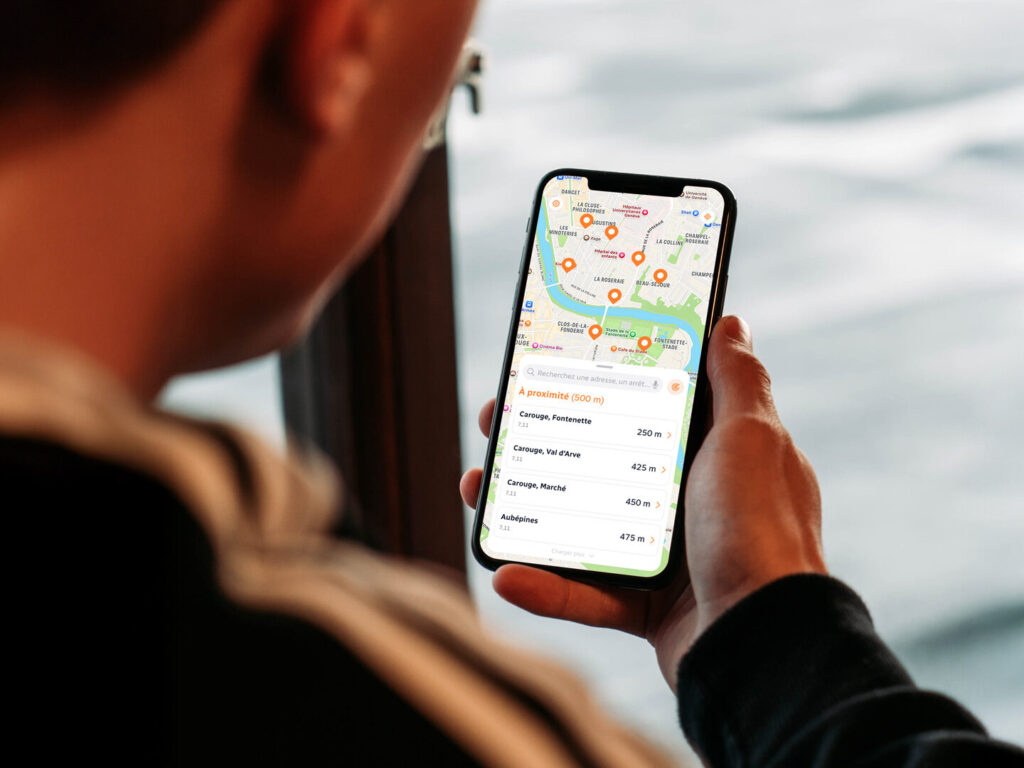
You get up in the morning, brush your teeth, leave for work, and suddenly, in a flash of inspiration, you say to yourself, ‘I want to create an app…’.
So yes, but first of all, what is the idea?
Making an app sounds great! However, if you’re just making an app for the sake of it, I’m afraid it’s likely to be useless.
The real question to ask yourself is: ‘Why create an application?’ because an application is above all an extension of your phone, computer, tablet, etc. that allows you to solve a problem.
Let’s take Facebook as an example. The application allows you to connect with your friends around the world to keep up with their news.
The problem that Facebook solves is that before its invention, the only way you could get news was by telephone call, correspondence… And even then, they still had to reply!
The problem before Facebook was that the only way to get news from your friends or loved ones was to call them, write to them, and above all, wait for them to reply! The solution provided by Facebook is an application that allows you to post moments from your life (text, photos or videos) on your wall, which your friends can view whenever they want.
As a result, Facebook remains the most widely used social network in the world (with an average usage rate of 65% for nearly 15 years, according to Statcounter)! (I know that it started out as a student directory, but I used its evolution as an example).
How to find your why
As you can see, the ‘why’ is key to the success of your app. But how do you find it?
In reality, it’s quite simple. Let’s take another example: every day, when you get home, you hate having to take out your keys to open the door. You always have your phone in your hand and you think to yourself that it would be really handy if it could be used as the key to your flat/house. So you have your reason: you need to create an app! And not just any app, a mobile app!
What, why, but above all, for whom?
Now that you have your idea, you need to think about who your application will be aimed at.
Still using the example of this key system, who would use your application? Young people, old people, private individuals, professionals, etc.?
This question is more of a marketing issue, but it can have a major impact on design and development. If your app is aimed at techies, you can afford to make it ultra-customisable with advanced features, but if your audience is retired people in nursing homes, you may need to take a more simplistic and down-to-earth approach.
In summary, you must tailor your project to your customers’ needs! Without this, you will be the only one using your application, as it will only serve your own purposes.
What, why, for whom, it’s good, how, it’s better!
Congratulations! You finally know what your application will be about! Now you need to figure out how to build it.
To do this, we will start with the design aspect. As a reminder, design is not just about colours, fonts, or images. When we talk about design, we are also referring to everything that comes before the style of your application.
The purpose of the ‘how’ is to define what we call the ‘Golden Path’ in order to determine the best way to solve your problem.
To return to the example of the ‘House Keys’ app, how does the user unlock their door? Is the door connected to the internet? Is it enough to press a button in the app to unlock it? Do you have to hold your phone close to an NFC sensor to trigger the process? Do you set a code in the app that you then enter on the lock? These are all important questions to ask yourself when designing your project.
In summary, this entire section concerns UX (user experience). You must also take technical constraints into account.
If you would like to learn more about UX, please refer to Chloé’s article!
What, why, for whom and how. Now, is that alright?
In theory, yes! The question of where to position yourself remains, but this question is implied. Unless there are technical details to the contrary, you will surely develop a hybrid application!
If we exclude the development part, your application is ready! All you have to do is develop it, taking into account the technical constraints according to the approach you have chosen.
If you would like to learn more about the different application architectures, I invite you to read my previous article.
Once developed, all you have to do is publish it and promote it on the channels that are appropriate for your target audience.
For all your ideas, first think about the problem, your target audience, then ask yourself how you are going to solve this problem and why you are the solution.
How do you create applications at O’Matic?
At O’Matic, we follow this approach of what, why, for whom, and how as closely as possible. Thanks to this approach, we can best support you in creating your project so that it can be used by the right users.
If you would like to create an application or website, please visit our contact page so we can discuss it!
Don’t forget that you can also find our tips and news on our Instagram profile and LinkedIn page.
